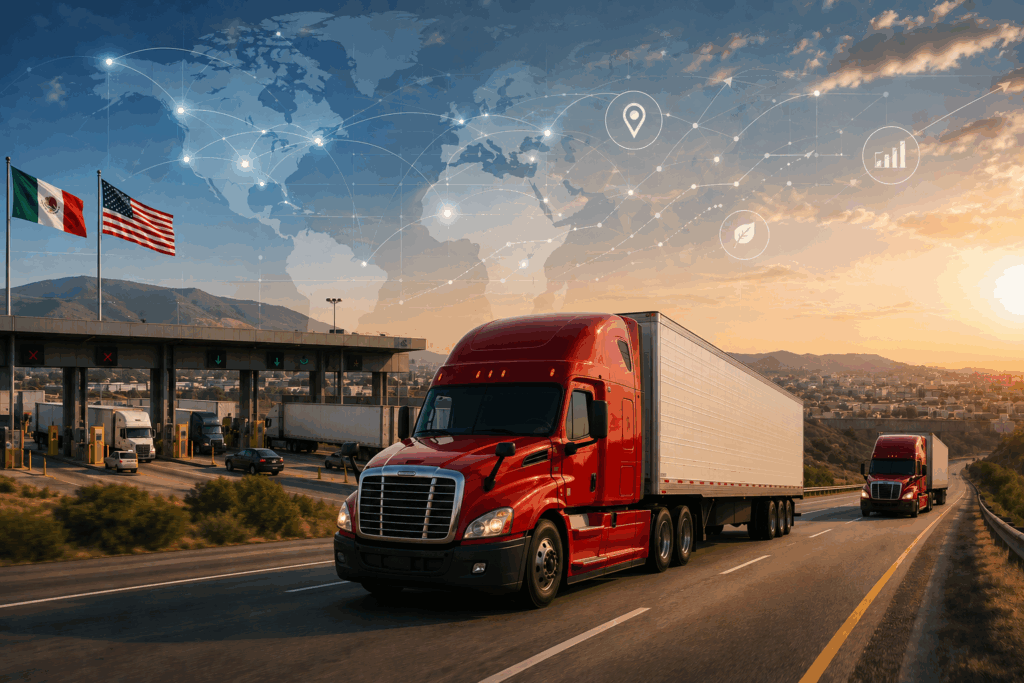
Thanks to its strategic location and world-class infrastructure, it has become the leading land trade corridor between Mexico and the United States, playing a critical role in North America's supply chains.
Much of its importance comes from its connection to Laredo, Texas, recognized as the busiest land port of entry for trade between the two countries. Through the World Trade Bridge and other international crossings, thousands of commercial trucks transport automotive parts, electronics, machinery, food products, medical devices, and a wide range of goods destined for the U.S. market every day. The Laredo region handles approximately 20,000 commercial truck crossings daily, accounting for nearly 35% of all U.S.–Mexico trade.
In addition to its highway connectivity, Nuevo Laredo offers a robust logistics infrastructure that includes customs facilities, transfer yards, warehouses, logistics providers, and rail connections. In 2025, a second international railway bridge was inaugurated, doubling rail freight capacity between Mexico, the United States, and Canada, further strengthening the trade corridor under the USMCA.
This logistics ecosystem enables companies to reduce transit times, improve operational efficiency, and maintain a reliable flow of goods to major industrial hubs across North America.
Did you know? The Laredo corridor is also the leading gateway for temperature-controlled freight, handling approximately 8,000 refrigerated truck shipments every day. It plays a vital role in transporting food, pharmaceuticals, and other perishable goods throughout the region.
As nearshoring and regional trade continue to reshape global supply chains, Nuevo Laredo is expected to remain one of North America's most strategic logistics hubs, connecting industries, markets, and business opportunities on both sides of the border.